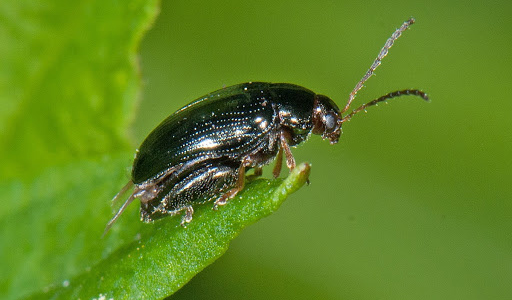
Flea beetles can cause major damage to crops. Most damage is done to vegetable plants. Pak choy, cauliflower, broccoli, Brussels sprouts, Chinese cabbage, turnips, arugula, radish and watercress are sensitive to this. There are also fleas that affect sugar beet, chicory, chicory and flax. These small jumping insects feed on young leaves and shoots, causing growth retardation, damaged leaves and reduced quality. Leaf crops themselves create an unsellable product. Timely recognition and targeted control are crucial to limit damage. This article describes how to recognize fleas, what risks they pose and what preventive measures are available, including the various insect screen options.
Flea beetles (Phyllotreta spp. and related species) are small, jumping insects that feed on young, soft parts of plants. They can multiply rapidly and provide characteristic snacks in leaves. This leads to growth retardation, a reduction in leaf surface area and, in some cases, the death of young plants. Although control with plant protection products is possible in certain situations, laws and regulations are increasingly restricting their use. Preventive measures and physical barriers are therefore an increasingly important part of the cultivation strategy.
Early detection of fleas is essential for effective control. Practical methods include:
By monitoring regularly, the population can be limited at an early stage.
Insect netting forms an effective physical barrier against fleas. Important points of attention when using it are:
Combining insect screens with monitoring and good cultivation practices reduces dependence on chemical crop protection products and supports healthy, sustainable cultivation. Make sure that the insect screen chosen has a mesh size that is also impenetrable to fleas. Insect screen that is suitable for this purpose: Ornata Light 2.0.
In addition to physical protection, an integrated approach is effective:
Combining these measures significantly reduces the damage caused by fleas and supports the quality and yield of the crop.
Keeping fleas outside requires a structured strategy and preventive measures. Insect netting offers a physical barrier, monitoring provides insight into the population, and integral cultivation measures provide control at multiple levels.
Key elements include:
This combined approach limits damage, supports sustainable cultivation practices and contributes to a healthy, high-quality harvest, in line with current regulations concerning chemical plant protection products.